Affichage des articles dont le libellé est general. Afficher tous les articles

vendredi 9 avril 2010

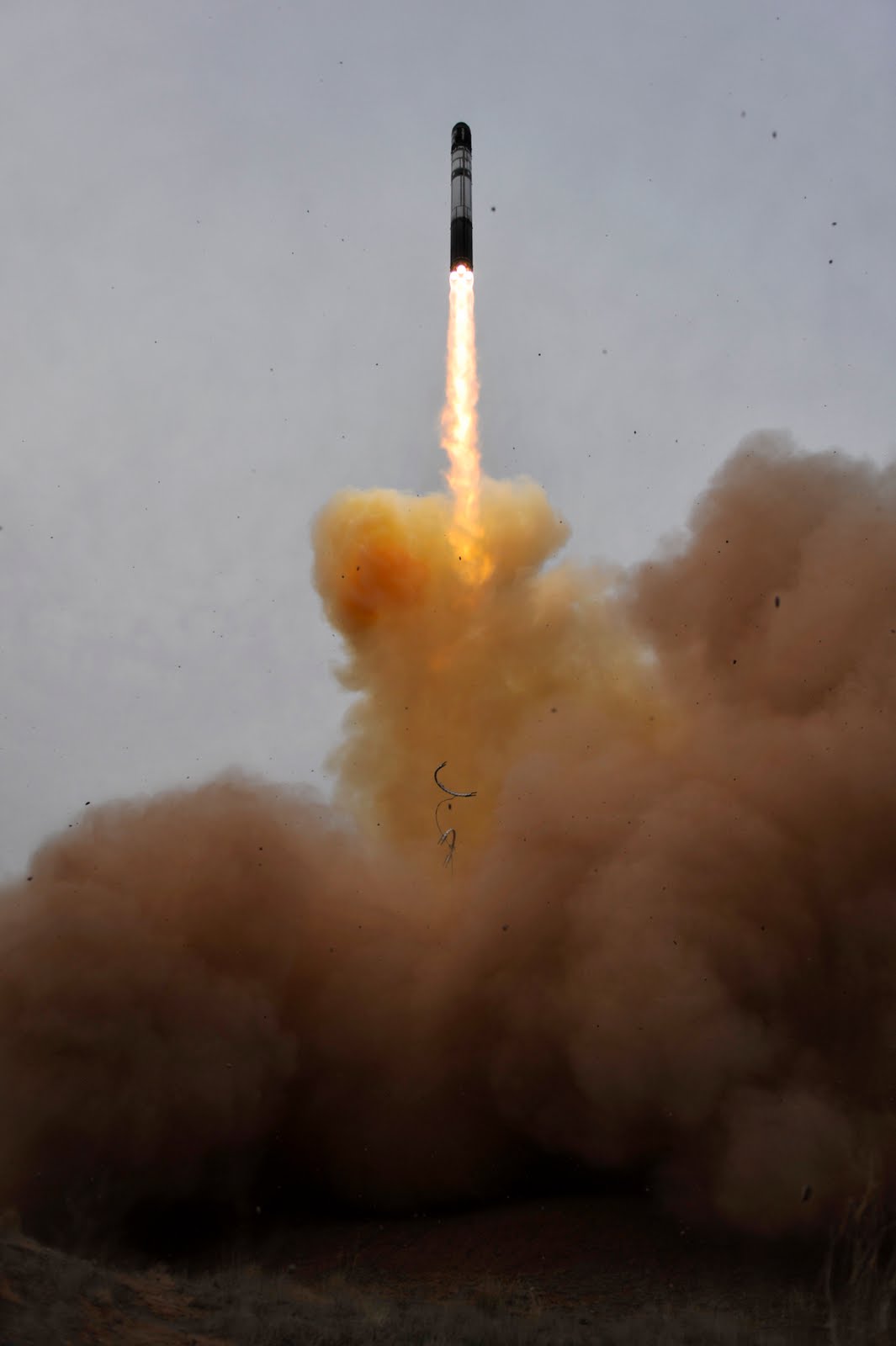
Few pictures of the CryoSat-2 launch


Credits: ESA (all pictures)
DNIEPR rocket, Baikonur Launch pad 109, 8/4/2010 - 19:57

jeudi 8 avril 2010

Launch successful

Bye Bye CryoSat!

Credits: Raphael
As long as you have now completed your life on Earth, have another long life in space and a fruitful mission.
Don't forget from time to time to give us GOOD NEWS : We do need it :-)

mercredi 7 avril 2010

1st orbit Ground station coverage

During the first orbit*, the most exciting thing will be the acquisition of the first CryoSat-2 telemetry data at ESOC through the various tracking stations.

Just after launch, the following stations will track CryoSat-2:
  • +12min00 Malindi AOS (Acquisition of Signal)
  • +21min36 Malindi LOS (Loss of Signal)
  • +31min28 Troll AOS (Troll is located in Antarctica and co-located with the Troll research station)
  • 43min28 Troll LOS
  • 1h26min13 Svalbard AOS
  • 1h26min31 Kiruna AOS (later on Science data will be acquire by Kiruna)
  • ...
The separation, occurring at +16min28, should normally perfectly fit the Malindi coverage. So if everything goes as planned, less than 20 minutes after launch, our colleagues from ESOC, the ESA Control Center in Darmstadt, should be able to "listen" CS-2 for the first time...

*An orbit lasts approximately 1hour and 30 minutes

DNIEPR Mission profile

In addition to the Count Down partly described in Campaign status 06/04/2010, the DNIEPR mission profile may be of interest for those willing to follow the launch tomorrow*.
  • +5 sec 1st stage motor ignition and lift off
  • +1min50 1st stage separation
  • +5min09 PayLoad Fairing separation
  • +5min54 2nd stage motor shutdown, 2nd stage separation
  • +6min00 3rd stage motor ignition, start of the 180 deg. rotation of the Upper Stage (US)
  • +6min07 End of the 180 deg. rotation of the US, 3rd stage motor enters to throttled-back operation mode
  • 16min25 Platform A and B (with Gas Dynamic Shield) separation (not quiet exactly represented on the picture below because CS-2 has the "'Long Space Head Module" configuration)
  • 16min28 CryoSat-2 Separation
  • 17min 09 Upper stage propellant depletion (end of DNIEPR Mission?)

Here below is an artist impression of the separation:

* A live TV broadcasting of the CryoSat-2 launch should be available on the ESA web site tomorrow (TBC)

lundi 15 mars 2010

Space and Earth debris

"Baikonur", a weekly local newspaper, gives on page 3 under the heading "Kosmoport", articles related to space activities in general and on the cosmodrome in particular.

On issue dated 26/02/10, this page was dedicated to Space Debris with 2 main articles:.
Who will remove the orbital junk? was the headline of the first article,

followed by: Russia wants to get rid of the space debris for the future generations.

These articles, like media in general, underline the increasing number of space debris over the past years and the associated risks if nothing is done. In addition, the unforeseen spacecraft collision in 2009 between Iridium-33 and decommissioned Kosmos 2251 put into perspective the dramatic increase of unexpected space debris if such accidents are not properly prevented.
Both articles draw the attention on the urgency to tackle seriously with this issue and the proposed ways of investigation. ESA, though it was not namely quoted in the newspaper, is perfectly aware of the danger and has already taken initiative together with other world space Agencies and actors to propose solutions to this complex question. For instance, some of the spacecrafts of the next generation will have to be designed for being de-orbited once their missions are over.
Finally, the Russian newspaper mentions NASA as a key player which has started to perform a mapping of the debris in space larger than 10cm.

In Baikonur city one can see on the ground few rocket debris as showed by the few pictures here after. But let's make it clear: these debris are fortunately not the results of launch failures falling from the sky. Otherwise opening an helmet shop down town would look as a promising business :-)
If our information are correct, they have been brought there and used for different purpose such as for instance to burn waste (as it can be seen by the trace of combustion of the insulation material)
Three large cylinders (ca 2 meters diameters) can be seen on the bank of the Syr Daria river.

It is may be exaggerated to say that they are now part of the landscape, or represent any kind of "open air art"'!

Another large bit can be seen closer to habitations in the North/western part of the city.

Credits: Raphael
A closer view shows burning on the external surface.

Credits: Raphael
Usually, drop zones are well defined and known far before launch. Ad-hoc measures are taken to prevent any impact on inhabited areas, keep populations safe, and remove the debris quickly once they fall on the ground (and even sometimes in seas or oceans).
For CryoSat-2 (CS-2), an agreement has been signed with Turkmenistan for the Dniepr first stage drop zone. This debris will swiftly be collected and disposed by a specialised team after launch. The Payload Fairing(PLF) and the Dniepr second stage will fall in the Indian Ocean.
To be complete, the Space Head Module (SHM) will remain in orbit. Due to the launcher design to free the CS-2 spacecraft in space, the SHM will split in 2 parts: Platform A and Platform B together with the Gas Dynamic Shield... adding then 2 space debris to the NASA register.

jeudi 7 janvier 2010

Antonov 124-100


This is the type of Cargo plane that will transport the CryoSat-2 Spacecraft from Munich to Baikonur.

Planned trip:

Munich-Ulianovsk
Ulianovsk-Baikonur (Yubileynyi). The airport inside the cosmodrome

mardi 5 janvier 2010

Introduction

The purpose of this blog is to provide on an informal basis few details to family, friends and colleagues interested to follow the Launch campaign of the Cryosat-2 (CS-2) Spacecraft that will take place on January and February 2010 in Baikonur (Kazakhstan).

CS-2 is the the ice mission of The European Space Agency (ESA). The prime Contractor for the spacecraft is ASTRIUM based in Friedrichshafen Germany.


A presentation abstract of the CS-2 mission has been recently released to the Geographical Research.

Launch is scheduled at the moment on February 25th, 2010 on a DNIEPR launcher.

So the launch campaign starting from 11/01/2010 up to 02/03/2010 will in principle last approximately 7 weeks.